


If you’re shopping for a new mattress, you’re likely familiar with firmness ratings. But you might be surprised to know that a firmness rating is really more of an educated guess than anything else, because mattress firmness is subjective.
Individual body type, weight, and personal preferences all influence how soft or firm a mattress feels, which means the same mattress can feel different from one person to the next. Furthermore, if your bed’s firmness doesn’t match your sleeping and body weight needs, this could affect the quality of your sleep due to discomfort or a lack of spinal and joint support.
Notably, the industry-standard mattress is medium-firm, considered the most accessible to a range of sleeper types and body sizes. At Mattress Clarity, we grade mattress firmness on a scale of 1 to 10, with 1 being super soft and 10 being rock-hard.
The good news is that understanding a bit about mattress firmness, including how it’s typically measured in the mattress industry, is the best way to find an appropriate firmness for your needs. In this mattress firmness guide, I’ll cover everything you need to know to find the best mattress firmness that works for you.
Mattress Firmness Scale Explained
Although a bed’s firmness may seem like a straightforward matter, it’s actually fairly nuanced. How soft or hard a bed feels is largely determined by body type and preferred sleep position.
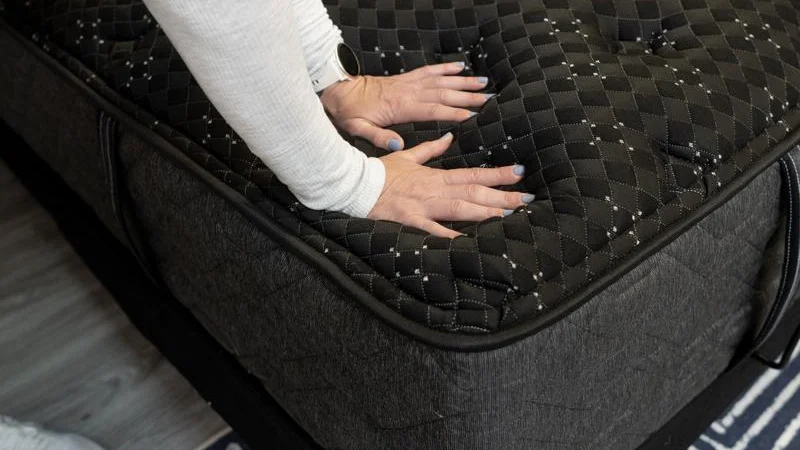
For a better understanding of what goes into determining a mattress’s firmness, I’ll break down what goes into the matter.
What Is Mattress Firmness?
When a mattress company refers to firmness, it’s a description of how the mattress feels when you lie on it. Some mattresses are soft and yielding — you feel yourself sinking into the mattress. Others are firmer, giving you the sensation that you’re resting on top of the mattress.
All of these observations relate to the mattress firmness. To help consumers understand what they can expect, especially for a mattress that can’t be tested in person before purchase, companies use a mattress firmness scale.
The 1-10 Mattress Firmness Scale
The mattress firmness scale ranges from 1 to 10, with 1 being the softest and 10 the firmest. Most mattresses fall into the medium-firm range, which is a 6.5/10 on the scale.
Below is a firmness chart that explains what each firmness rating means.
| Firmness Rating | Feel |
| 1-2 | Extra Soft |
| 3-4 | Soft |
| 5-6 | Medium |
| 6.5-7 | Medium-Firm |
| 7.5-10 | Firm |
Mattress Firmness vs Mattress Support
While the terms “firmness” and “support” are often used interchangeably when discussing the properties of a mattress, they aren’t the same thing.
What Is Firmness and Support?
Firmness describes how the mattress feels when you lie on it. A mattress can have a plush pillow-top, but still be considered firm.
Whereas support refers to how well the mattress helps you maintain proper spinal alignment. If a bed keeps your entire body lifted, providing an even, balanced feel, it is supportive.
Can a Mattress Be Soft and Supportive?
Yes, a mattress can be both soft and supportive. However, this depends on your sleeping style and weight.
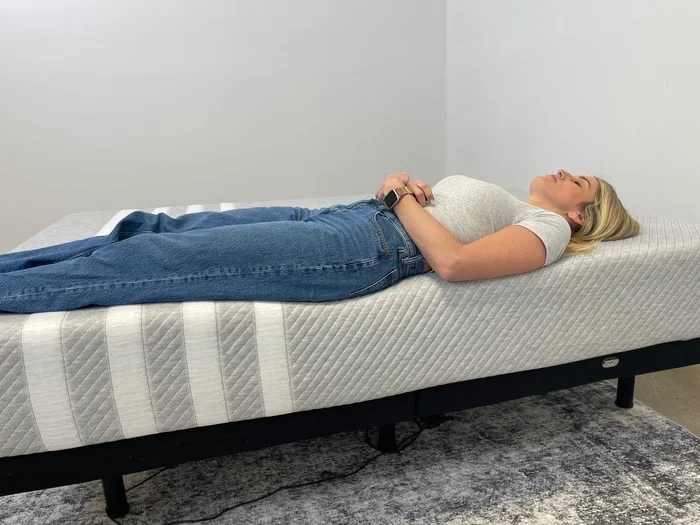
A lightweight side sleeper would be a good example of someone who would find a softer mattress very supportive. In this case, because they sleep on their side and won’t sink too much into a bed’s top layers due to their weight, they can feel the pressure relief of a bed’s comfort and cushioning layers while still experiencing spinal and joint support.
Furthermore, mattress toppers or pillow tops can add a plush surface to a firmer mattress. For context, this offers a heavier or non-side sleeper a softer feel while still getting enhanced support from a firmer bed that better suits their weight and sleeping patterns.
Best Mattress Firmness by Sleeping Position

Side Sleepers
Recommended firmness:
4/10 to 6/10
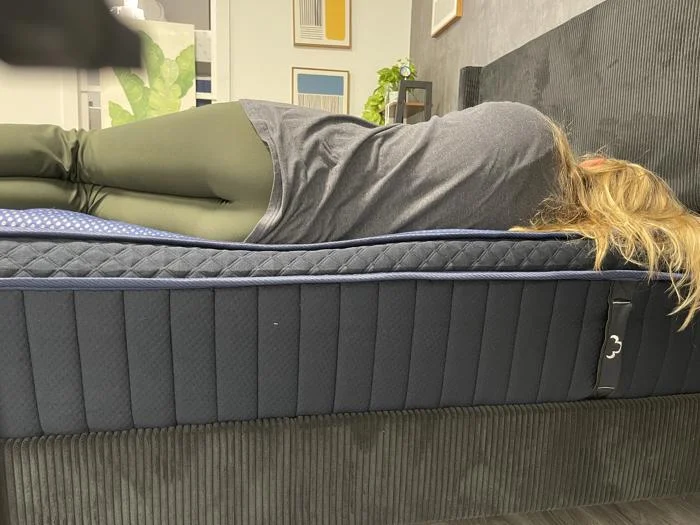
For side sleepers, soft mattresses can offer pressure relief at the shoulders, hips, and lower back. This softer range, 4/10 to 6/10 on the firmness scale, is often the best for side sleepers.
However, we’ve tested a lot of beds and haven’t come across too many that are 4/10. Side sleepers who like a soft bed will find more in the 5-6/10 range. Side sleepers who don’t like a doughy soft feel can also often be served well by some medium-firm beds.
Back Sleepers
Recommended firmness:
6/10 to 7/10
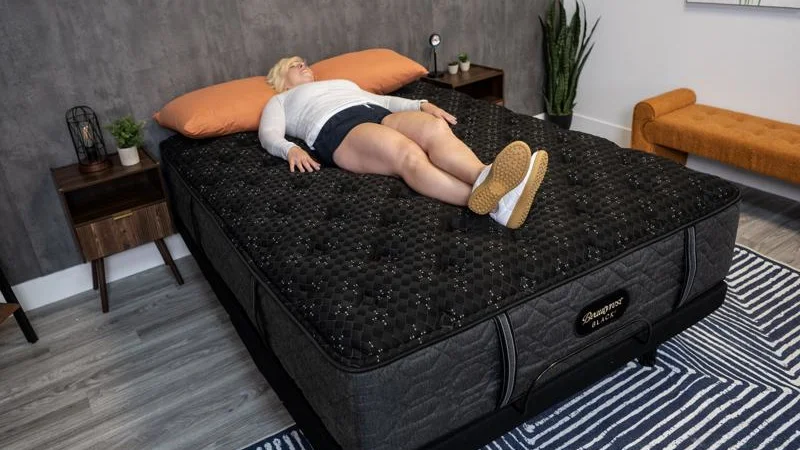
Back sleepers, for example, need a mattress that’s firm enough to support them properly, but soft enough to avoid tension in the lumbar zone. Medium-firm mattresses tend to offer the best mattress firmness for back sleepers because there’s enough support to keep the spine neutral, but enough softness to help relieve pressure and pain.
This firmness range is highly versatile, and back sleepers should have a large selection of beds to choose from.
Stomach Sleepers
Recommended firmness:
7/10 to 9/10
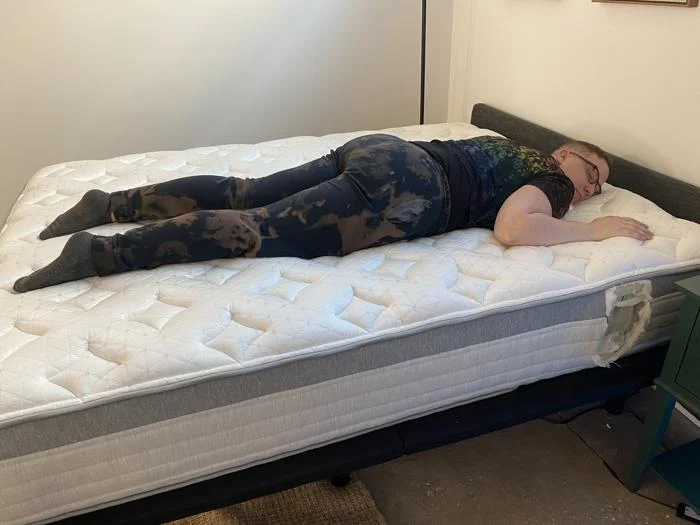
Those who sleep in the prone position, on the other hand, need firm mattresses that lift and support the hips. Otherwise, the spine can become misaligned, leading to back pain. The best mattress firmness for stomach sleepers tends to be 7/10 or higher on our firmness scale.
Combination Sleepers
Recommended firmness:
5/10 to 7/10
Combination sleepers, or people who switch sleeping positions throughout the night, tend to appreciate beds in the 5/10 to 7/10 firmness range. I would generally suggest medium-firm (6.5/10) mattresses for combination sleepers, but if you’re a heavier combination sleeper, it may be better to opt for a firmer mattress.
You will want a mattress that offers versatility, or a firmness that is more likely to accommodate different sleeping patterns (like the industry standard 6.5/10) without leading to problematic sinkage or a lack of pressure relief.
Best Mattress Firmness by Body Weight

Dr. Raj Dasgupta, a quadruple board-certified physician and sleep expert, advises, “Your body weight greatly determines how soft or hard a mattress feels.” Two back sleepers in different weight categories — light and heavy, for example — will experience a different level of firmness or softness on the same mattress.
Factoring in your body weight can steer you toward a mattress that will suit your sleeping position, regardless of how the manufacturer ranks its firmness score. If you’re over 230 lbs and looking for a new mattress that will give you the support you need, consider our best mattress for heavy people.
Under 130 lbs (Lightweight Sleepers)
Lightweight sleepers will be able to enjoy softer mattresses more easily, without sinking too deeply and causing spinal misalignment. However, this depends on your sleeping position.
Lightweight side sleepers will prefer a much softer feel (4/10 to 6/10), back sleepers prefer a medium-firm feel (5.5/10 to 6.5/10), and stomach sleepers will want the firmest feel (6.5/10 to 7.5/10).
Lightweight combination sleepers should consider a firmness of 5/10 to 6.5/10 and may want to try a hybrid mattress for its versatility.
130-230 lbs (Average-Weight Sleepers)
Medium-firm mattresses (6.5/10) are likely the best and most compatible with a range of sleeper types in this category. However, this again depends on your sleeping style. Similar to lightweight sleepers, average-weight side sleepers will likely prefer a softer mattress, back sleepers prefer a medium-firm feel, and stomach sleepers prefer a firmer feel.
I’d suggest considering a medium-firm hybrid mattress for average-weight combination sleepers, given its accessibility.
Over 230 lbs (Heavyweight Sleepers)
Heavier sleepers will need a firmer mattress that can support their weight and prevent problematic sinkage. A similar logic can be applied to firmness and sleeping position for heavyweight sleepers as I described for lightweight sleepers. However, I would consider elevating the firmness level for each sleeper type.
For example, heavier side sleepers may want to consider a 5/10 to 6.5/10 firmness, back sleepers a 6.5/10 to 8/10 firmness, and stomach sleepers a 7.5/10 firmness and above.
Hybrid mattresses, especially firmer ones, are also great for heavier sleepers who struggle to find a mattress that can durably adapt and support their varying sleeping patterns.
| Weight Category and Sleeping Position | Preferred Firmness |
| Lightweight Side Sleepers | 4/10-6/10 |
| Lightweight Back Sleepers | 5/10-6.5/10 |
| Lightweight Stomach Sleepers | 6/10-7.5/10 |
| Average-Weight Side Sleepers | 5/10-6/10 |
| Average-Weight Back Sleepers | 6/10-7.5/10 |
| Average-Weight Stomach Sleepers | 7/10-8/10 |
| Heavyweight Side Sleepers | 5/10-7/10 |
| Heavyweight Back Sleepers | 6.5/10-8/10 |
| Heavyweight Stomach Sleepers | 8/10-10/10 |
Best Mattress Firmness for Back Pain
Disclaimer: Please note that the content in this article is meant for informational purposes only and should not be construed as medical advice or serve as a substitute for seeing a medical professional regarding any sleep problems you may have. Please see your doctor regarding any urgent medical issues.
For side sleepers, soft mattresses can offer pressure relief at the shoulders, hips, and lower back. Stomach sleepers, on the other hand, need firm mattresses that lift and support the hips. Otherwise, the spine is pulled out of alignment, which can lead to back pain.
Most stomach sleepers do well on a mattress with a firmness rating of 7/10 or higher. There are many mattresses that have firmness to help not only feel supported but also help to keep the spine aligned, such as the ones featured on our best mattresses for back pain review.
Lower Back Pain
It’s important to match your bed’s firmness with your weight and sleeping positions to find the best mattress firmness for back pain that keeps your spine aligned. So your preferred firmness, regardless of your pain issue, will always be more related to your sleeping position and weight than to your pain issue in particular.
However, mattresses with “zoned lumbar support” are engineered to help people struggling with lower back pain in particular. Dr. Dasgupta stated that mattresses that keep your spine aligned and provide overall support can ease back pain.
Hip Pain
The best mattress firmness for hip pain is one that helps keep your hips aligned with your spine while you sleep, and is related to your sleeping style and size. However, finding a mattress with high-quality pressure relief and cushioning around the hips can help reduce hip pain.
Shoulder Pain
The best mattress firmness for shoulder pain should provide ample cushioning around the shoulders while maintaining spinal alignment support. As with other back-pain-focused mattress features, I would suggest ensuring your mattress offers high-quality pressure relief and cushioning around the shoulders.
Sciatica
Sleepers with sciatica really need excellent pressure relief in their mattress. People with sciatica may prefer a softer mattress in general, but it’s most important to match your mattress firmness to your weight and sleeping patterns.
Dr. Hannah Habeeb, our chief medical product tester, called the Helix Dusk Luxe a great mattress for those with sciatica (and back pain in general). “I love that it has a comfortable, plush, cushiony feel, but also keeps my spine aligned and my body in a neutral position,” she said. She added that this mattress also filled the gap around her lower back, which could ease sciatic pain.
Soft Mattress Pros and Cons
Medium Mattress Pros and Cons
Firm Mattress Pros and Cons
Which One Is Right for You?
The right firmness for you depends on your weight and sleeping style. This is a consistent theme in this article, but an important thing to remember. It’s always good to consult our mattress firmness scale or take our mattress quiz for tailored recommendations based on your unique needs.
Best Mattress Firmness by Mattress Type
Memory Foam
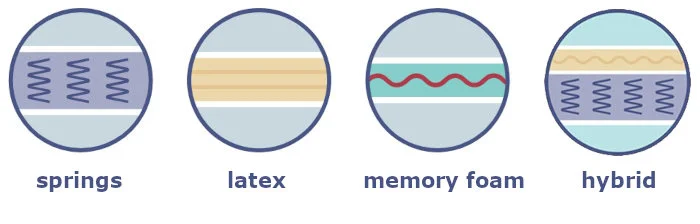
Memory foam mattresses are known for a plush “sinking” feeling, and are designed to adapt to your body, offering enhanced cushioning. However, because they lack coils, they tend to run softer than other mattress types. Furthermore, the sinking feeling can offer excellent comfort, but because these beds often feel softer, it’s important to make sure the mattress is firm enough to cushion you without letting you sink so much that your spine gets misaligned.
Most sleepers may not realize that a medium-firm memory foam bed can feel softer than a medium-firm latex or hybrid mattress, because the materials are different. This applies to each mattress type, which I’ll elaborate on below.
Hybrid
Hybrid mattresses are great because they offer both coiled support and foam-based comfort. As a result, hybrids are highly versatile, making them more accessible to different types of sleepers. Hybrid firmness is one of the more reliable firmness ratings, thanks to the inherent balance of comfort and support it offers sleepers.
Beyond matching firmness to your weight and sleeping position, choosing a hybrid’s firmness is really about finding that sweet spot between comfort and balance when you rest on it.
Latex
Latex mattresses are known for their strong responsiveness or bounce, making them very reliable for moving around and providing support even when switching sleeping positions. However, while latex mattresses’ buoyancy can offer benefits, they tend to feel firmer as a result, potentially making them feel too firm for lightweight sleepers.
So, when considering a latex bed, you may want to really focus on whether its firmness will still offer the comfort and pressure relief you expect and need from a bed.
Innerspring
Innerspring mattresses also tend to run firmer, because they prioritize coiled support over multiple comfort or foam-based layers. Like latex, and even more so, innerspring mattresses will likely feel firmer than, say, a memory foam bed at the same rating.
How to Test Mattress Firmness Before Buying
Below are a few ways to test and assess mattress firmness before buying a bed.
Sleep Trials
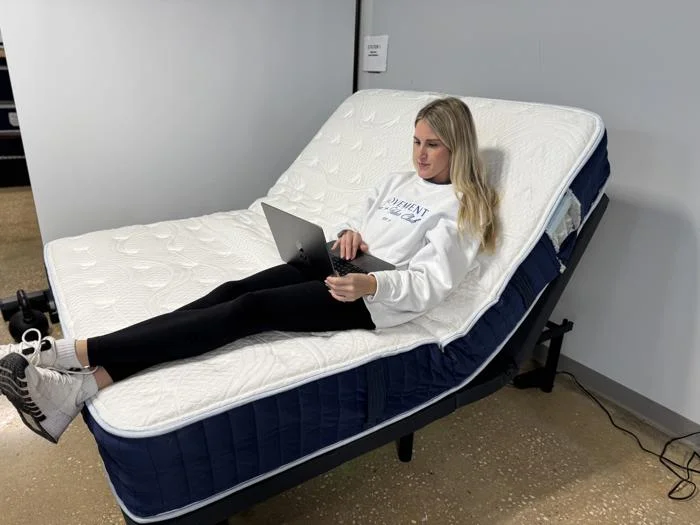
Sleep trials often reflect a company’s confidence in its product. Furthermore, sleep trials usually last 30 to 365 nights, which allows you to get a real-life sense of whether a mattress will offer you restorative sleep over time.
In-Store Testing
The main benefit of trying a mattress in-store is the ability to physically test it before bringing it home. However, it’s difficult to truly gauge whether a mattress’s firmness will be good for you in the long term by simply lying on it for a few minutes.
Try your best to consider the results of our mattress quiz, or use the information on what the best mattress is based on your sleep patterns and weight, to pick which mattress in the store you want to try out (rather than just feeling comfortable on one at random).
What to Look For
Try to assess how supported and aligned your spine is, how well your weight is distributed across the bed, and how well your joints and pressure points are cushioned. Of course, it’s also crucial to compare these important orthopedic considerations with just how simply comfortable a mattress is.
Signs a Mattress Is Too Soft
If you’re sinking into a mattress to the point where your spine is misaligned, or you can’t maintain healthy posture in your sleeping position, it may be too soft for your weight and sleeping style.
Signs a Mattress Is Too Firm
If you’re unable to experience any pressure relief or general comfort, a mattress may be too firm. It’s great to have durable spinal support, but pressure relief, cushioning, and relaxation are equally important.
Common Mattress Firmness Mistakes
Below are a few examples of common mistakes people make when choosing mattress firmness:
- People often assume that the firmer, the better, for back pain. However, while firmer mattresses may help keep the spine aligned for some back and stomach sleepers, they can worsen back pain for side sleepers. A super firm mattress is not a one-size-fits-all solution for back pain, but matching your weight and sleeping position to a bed’s firmness is the best approach.
- Only reading customer reviews on a bed’s official site may not be the most reliable way to gauge how firm a mattress is. It’s important to read multiple website reviews and third-party, unbiased reviews, while being wary of seller reviews.
- Body weight is just as important as how you sleep when choosing a mattress. You do not want to sink too deep into a mattress (heavyweight sleeper problem) or feel like you’re floating on the mattress (lightweight sleeper problem). That’s why you need to consider your weight when choosing the right firmness.
- Just as weight does, your sleeping position relates to your firmness choice. Side sleepers prefer softer cushioning, while stomach sleepers prefer firmer support. Always consider sleeping position when choosing firmness.
Frequently Asked Questions
Is a firm mattress better for back pain?
Firmer mattresses can be better for back pain, but this depends on your sleeping position and weight. Back and stomach sleepers may appreciate firmer mattresses, while side sleepers may experience better spinal alignment and reduced back pain on softer mattresses.
What firmness do hotels use?
Hotels tend to use the “industry-standard” medium-firm (6.5/10) firmness because it is the most accessible to different types of sleepers who may end up using their beds.
Is medium-firm best for most sleepers?
Medium-firm is not necessarily the best for all sleepers, but it’s quite often the best for average-weight back sleepers and combination sleepers.
Can a mattress be too firm?
Yes, a mattress that doesn’t offer pressure relief or any comfort would be an example of a mattress that is too firm.
What firmness should side sleepers choose?
Side sleepers tend to go for a softer mattress, but this depends on their weight. For context, average-weight side sleepers may enjoy a firmness rating of 5/10 to 6/10.
Does mattress firmness change over time?
Mattress firmness can change over time due to long-term use. Years of compression, lack of durability, or the use of cheap materials can cause firmness to change or a bed’s edges to sag over time.
What firmness is best for couples?
The best firmness for couples is one that works for both partners’ sleep patterns and weight. This may mean a medium-firm mattress to balance both sleepers’ needs, but if both are lightweight and sleep on their sides, it could mean a softer firmness because it accommodates both their specific styles.